The more things change, the more they stay the same. For several years now it’s been true that getting an AI demo to work is easy, but keeping an AI system working reliably inside a real organization is much harder. To succeed, leaders need three things: strong ML and LLM operations, deep collaboration between business and technical teams, and clean, well-prepared data. Without these foundations, even the most impressive AI demos will struggle once they reach production.
That’s why I invited Kristen Kehrer to join me on an episode of “What’s the BUZZ?” to talk more about the operational aspects of AI.
Getting AI Into Production Is Harder Than Building the Demo
With AI coding tools, anyone can create a working LLM demo in just a few hours. The responses look polished, the system appears intelligent, and it can feel like the hardest part is already solved. But the demo is the easy part as the inputs are controlled and predictable. In production, users ask unexpected questions, edge cases appear constantly, and systems must operate reliably at scale.
Large language model applications introduce a new layer of complexity compared to previous machine learning projects. Language requires organizations to evaluate factors such as tone, clarity, brand voice, and factual accuracy. A response might be technically correct but still inappropriate for a customer-facing interaction.
If a system generates an incorrect response, the problem may not be the model at all. Because of this complexity, organizations need structured operational practices to manage these systems. This is where MLOps and LLMOps come into play.
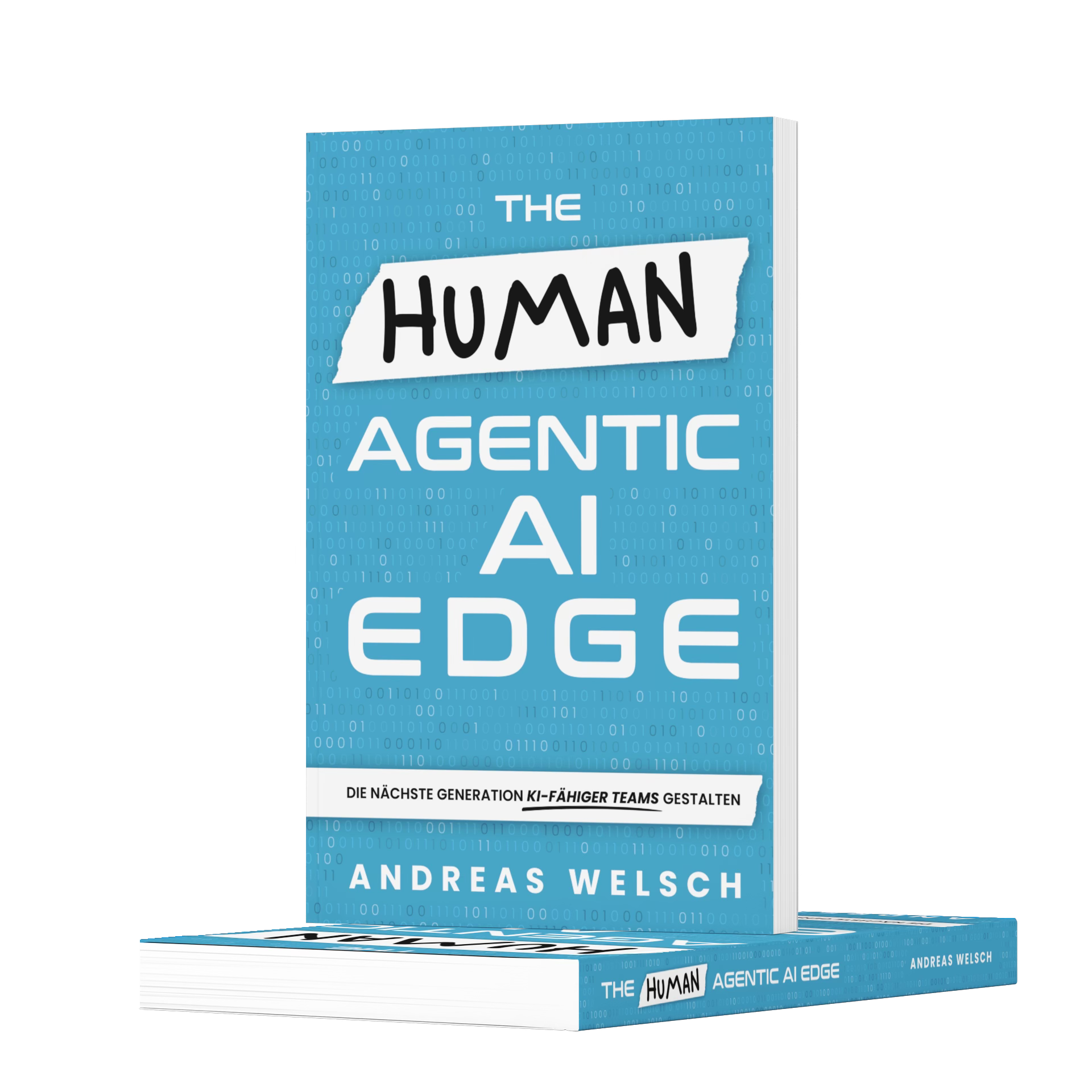
Get your copy: The HUMAN Agentic AI Edge
Organizations are racing to deploy Agentic AI, yet few are ready for the risks that emerge when employees use AI without structure, standards, or oversight.
The HUMAN Agentic AI Edge offers leaders a practical blueprint for building accountable AI-ready teams that consistently produce high-quality results. Drawing on real-world knowledge and insights from interviews with more than 50 AI leaders and experts, Andreas Welsch shows how to combine human judgment with Agentic AI capabilities to achieve the performance many organizations expect but rarely deliver. This book prepares you to shape the next generation of AI-ready teams delivering high-quality results with high accountability.
Understanding the Difference Between MLOps and LLMOps
Machine Learning Operations (MLOps) focuses on managing machine learning systems throughout their lifecycle. Its primary goal is to ensure that models are reproducible, reliable, and auditable.
LLMOps builds on MLOps’ principles but expands them to support language model applications. Unlike traditional machine learning, many LLM applications rely on foundation models that organizations do not train themselves. Instead, teams build systems around the model. This introduces additional components that must be tracked and managed.
For example, LLMOps involves versioning prompt templates, tracking retrieved context from knowledge bases, managing few-shot examples, monitoring user interaction logs, and sometimes handling fine-tuning datasets. LLMOps provides the operational framework needed to manage these additional layers and keep language-based systems reliable over time.
The Critical Role of Data in AI Systems
Many organizations assume they can connect an LLM to their internal documents and immediately create a useful system. In practice, those documents often contain inconsistencies, outdated information, or overly specific examples.
When such documents are placed directly into a knowledge base, the model may retrieve incomplete or misleading context. This leads to inconsistent responses and unreliable behavior.
Clean, structured data allows retrieval systems to surface the correct context consistently. It also reduces the need for complex prompt engineering later on. Investing time in data preparation early often saves far more effort later in the lifecycle.
Summary
AI is often presented as a revolutionary technology that can transform organizations overnight. The challenge is operating AI systems reliably in the real world.
Three lessons stand out:
Operational practices such as MLOps and LLMOps are essential for managing AI systems over time. They provide the structure needed to track experiments, manage model versions, monitor performance, and diagnose problems.
LLM-based projects require far greater collaboration than traditional machine learning. Business stakeholders, subject matter experts, and technical teams must work together to define how systems should behave.
Data quality remains a critical foundation. Without clean and well-structured knowledge bases, even the most advanced language models will struggle to produce reliable results.
Organizations that recognize these realities early are far more likely to turn AI experimentation into meaningful outcomes.
The next step for leaders exploring AI is designing the processes, collaboration models, and data foundations that allow AI to deliver value long after the initial excitement fades.
Equip your team with the knowledge and skills to leverage AI effectively. Book a consultation or workshop to accelerate your company’s AI adoption.
Join my bi-weekly live stream and podcast for leaders and hands-on practitioners. Each episode features a different guest who shares their AI journey and actionable insights. Learn from your peers how you can lead artificial intelligence, generative AI, agentic AI, and automation in business with confidence.