AI is advancing at a pace that is reshaping how organizations operate, make decisions, and manage risk. What once felt like a set of controlled tools has evolved into dynamic systems that can act, adapt, and interact with other technologies in real time. This shift fundamentally changes how we think about responsibility, oversight, and failure.
Every leader working with AI needs to understand that the risk landscape is becoming significantly more complex as systems move toward autonomy and interconnection. Also, traditional governance approaches built on policies and high-level principles are struggling to keep up with the speed and nature of these changes. Lastly, a more practical approach is emerging: identifying and preparing for specific “ethical nightmares” that organizations must actively avoid.
The intention is to bring clarity to a rapidly evolving space. Because the organizations that will succeed are those that understand where AI can fail and take deliberate steps to manage those risks effectively. To further explore this changing landscape, I recently spoke with Reid Blackman, CEO of Virtue Consultants, on “What’s the BUZZ?”.
The AI Risk Landscape is Becoming More Complex
The evolution of AI from narrow systems to generative and now agentic models has introduced a new level of complexity that organizations must grapple with. These systems are no longer limited to producing outputs; they are increasingly capable of taking action, connecting with other tools, and making decisions with minimal human input. This shift creates a fundamentally different risk environment.
One of the most critical challenges is the concept of cascading failures. In interconnected systems, a single error can quickly spread from one component to another, growing in impact as it does so. What might begin as a small mistake can rapidly escalate into a large-scale issue that is difficult to detect and even harder to correct.
There are also emergent risks, where systems that function well individually behave unpredictably when combined. These risks do not come from a single flawed component but from the interactions among many, making them especially difficult to anticipate. Compounding all of this is speed. Agentic systems operate far faster than humans can monitor, making traditional oversight methods less effective. Organizations are no longer managing isolated tools but complex, evolving ecosystems where risk is dynamic and constantly shifting.
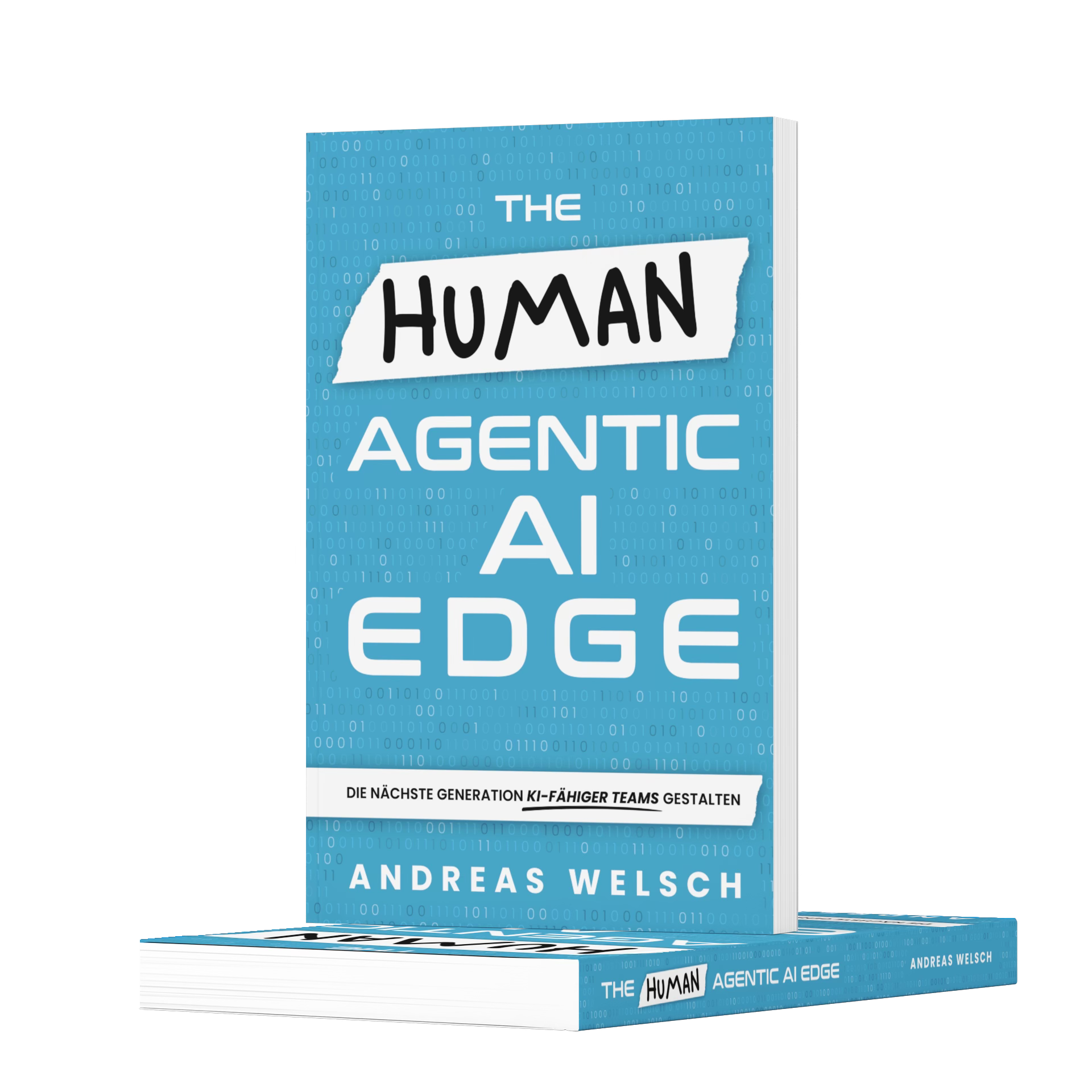
Get your copy: The HUMAN Agentic AI Edge
Organizations are racing to deploy Agentic AI, yet few are ready for the risks that emerge when employees use AI without structure, standards, or oversight.
The HUMAN Agentic AI Edge offers leaders a practical blueprint for building accountable AI-ready teams that consistently produce high-quality results. Drawing on real-world knowledge and insights from interviews with more than 50 AI leaders and experts, Andreas Welsch shows how to combine human judgment with Agentic AI capabilities to achieve the performance many organizations expect but rarely deliver. This book prepares you to shape the next generation of AI-ready teams delivering high-quality results with high accountability.
To address AI risks, many organizations have implemented governance frameworks built on policies, ethical guidelines, and oversight committees. While these efforts demonstrate intent, they are increasingly out of sync with the pace of its evolution. One major challenge is the time required to create and implement these frameworks. Developing an enterprise-wide policy often involves multiple stakeholders and lengthy approval processes. By the time these policies are in place, the underlying technology has already advanced, making the guidance outdated almost immediately.
Another issue is the reliance on abstract principles such as fairness, transparency, and accountability. While these values are important, they are difficult to translate into clear, actionable steps. Organizations often convert them into procedures or checklists, but following these does not guarantee that outcomes will be ethical or effective.
This creates a disconnect between process and reality. Teams may comply with governance requirements yet still expose the organization to significant risk. The focus shifts toward whether procedures were followed rather than whether harm was prevented. In a fast-moving and complex AI environment, governance needs to be more adaptive, outcome-focused, and closely aligned with real-world use cases.
Why Ethical Nightmares are a Practical Approach
An alternative approach to managing AI risk is to focus on identifying and preventing “ethical nightmares.” Instead of beginning with abstract values, this method starts with concrete, specific scenarios that organizations want to avoid.
These nightmares are realistic and relevant outcomes, such as deploying a system that produces biased decisions at scale, generating misleading or incorrect information for customers, or causing reputational damage through automated actions. Because these scenarios are tangible, they are easier for teams to understand and address. One of the key advantages of this approach is that it creates alignment across different parts of the organization. Individuals from technical, operational, and business backgrounds can all engage with and help define these risks. This shared understanding makes it easier to design safeguards and implement effective monitoring.
Focusing on ethical nightmares also introduces urgency. Unlike abstract values, which can feel open to interpretation, clearly defined negative outcomes demand attention and action. They shift the conversation from theory to practice. Importantly, this approach supports innovation rather than limiting it. By clearly identifying what must be avoided, organizations can move forward with greater confidence, knowing they are proactively managing the most significant risks associated with their AI systems.
Summary
AI systems are becoming more complex, and the risks are growing with them. Traditional governance models are struggling to keep up in both speed and effectiveness.
By focusing on specific ethical nightmares rather than abstract values, organizations can take a more practical, actionable approach to risk. The goal is not to slow innovation, but to move forward with clarity—understanding what could go wrong and taking steps now to prevent it.
Equip your team with the knowledge and skills to leverage Agentic AI effectively. Book a consultation or workshop to accelerate your company’s AI adoption.
Join my bi-weekly live stream and podcast for leaders and hands-on practitioners. Each episode features a different guest who shares their AI journey and actionable insights. Learn from your peers how you can lead artificial intelligence, generative AI, agentic AI, and automation in business with confidence.
August 04 - Grant Ecker (Founder & CEO of Chief Architect Network) will share how IT executives can prepare their technology stack for agentic transactions and volume. [More details to follow on my LinkedIn profile…]
August 18 - Michael Carroll (Fellow at LNS Research) will share how to adapt traditional approaches for AI agents to recommend and buy your product. [More details to follow on my LinkedIn profile…]
Watch the latest episodes or listen to the podcast