



Over the past five years, I’ve spoken at several dozen events, appeared on almost 100 podcasts, and been quoted 25 times in industry media. But everything lives on someone else’s website or show. Six months ago, I set out to update my website to become more discoverable by AI. Four months ago, I wrote about the need to be discoverable and shared some initial steps you can take. In this article, I’m sharing my approach and the measurable results I’ve seen since.
The consensus is that Search Engine Optimization (SEO) alone no longer suffices, and any company or individual looking to be discoverable by AI needs to appear in Generative Engine Optimization (GEO) and Answer Engine Optimization (AEO) results. External mentions signal topic authority. On your own website, you don’t need to start with entirely new content. Instead, you can turn the existing artifacts into traffic to your own website and offerings.
Build Your Authoritative Digital Footprint
Whether your digital media team authors corporate blog posts, your leaders present at industry events, or executives appear on camera, most companies have a growing digital footprint. The information is shared and the words are spoken, but companies aren't leveraging it well enough afterward. (That was true in my case, too.)
At the beginning of the year, I built an n8n workflow to turn contributions from keynotes, podcast appearances, and media mentions into articles published on my website’s blog. For video podcasts, a third-party service extracts the transcript. Stability AI generates an image that matches the keywords and topic. An LLM processes only the statements and quotes I made in multi-speaker items and rewrites them as a GEO/AEO-optimized article. The LLM also proposes a title, meta description, and URL slug to optimize discoverability. Another function adds internal links to other content on my website and a link to the YouTube video or the original source. n8n stores the draft post on my website for my review. Once I’ve made any final edits, the post goes live. Since the initial build in n8n, I have turned this workflow into a set of skills, MCP Servers, and instructions that a Claude agent runs.
What this means: Within two minutes of starting the workflow (plus another ten minutes of manual edits), the perspective and insights I’ve already shared become a repurposed piece of content that lives on my website.

Group Topics on Your Website in Content Pillars
This spring, I used Claude to improve my website for AI agents. From reviewing my core messages and target audiences to identifying themes in articles I'd already repurposed, four key areas stood out, including Agentic AI and AI Leadership. These topics became home to pillar pages that surface relevant articles and add more information about each pillar.
The copy on these pages is optimized for AI agents. Each page includes a list of recent articles, insights from my books, and a set of frequently asked questions with bite-sized answers that AI can pick up. Additional details in LLM.txt, schema markup, and breadcrumb navigation make the website easier for AI to process. Once these content pillars are set up, you only need to run a quarterly review to ensure the static information is still relevant and aligned with your ideal customer profile and outcomes.
What to do now: Review your most relevant content and group it by topics. Create content pillar pages on your website that surface the latest articles and blog posts by topic, and create copy optimized for your target audience’s AI agents(!) that describes the content pillar.
Measuring the Impact Through Web Analytics
If you haven’t already, add your website to Microsoft Bing Webmaster Tools and Google Search Console’s search index, as these platforms are the prime sources for AI agents’ results. Like SEO, GEO/AEO updates take 3-4 months to show results. A few days ago, I checked the results in Microsoft Bing Webmaster Tools and Google Search Console. Each shows about 2,000 AI citations of articles or pages on my website within the last three months. Right now, articles about what an AI task force is and how to set one up are the most cited. Although neither platform shows the exact breakdown by AI tool, Bing’s results are likely driven by Copilot searches.
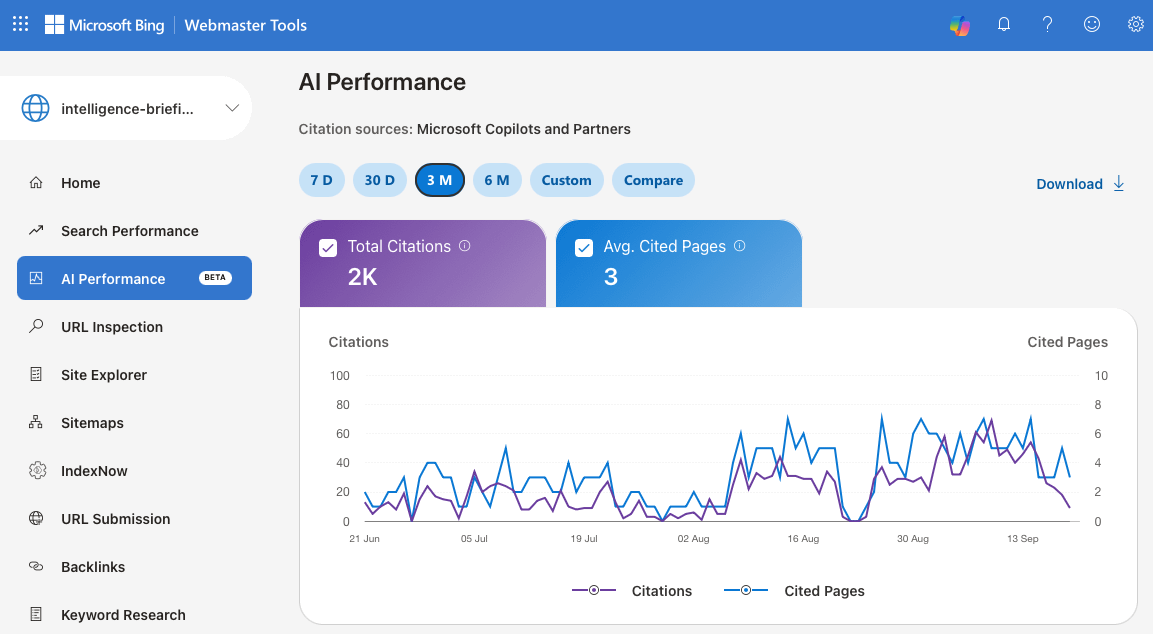
Over the past month, I built two MCP Servers for Bing Webmaster Tools and Google Search Console to gather my website’s analytics. Every week, one of my Claude agents fetches the update via the MCP Servers and saves the results in my business database. Week over week, changes and trends become visible, and the top pages driving most Generative AI citations become clearer. With that data in hand, another agent can analyze the structure of the top-performing articles and determine how to update existing ones (and draft new ones), so they become top-performing as well.
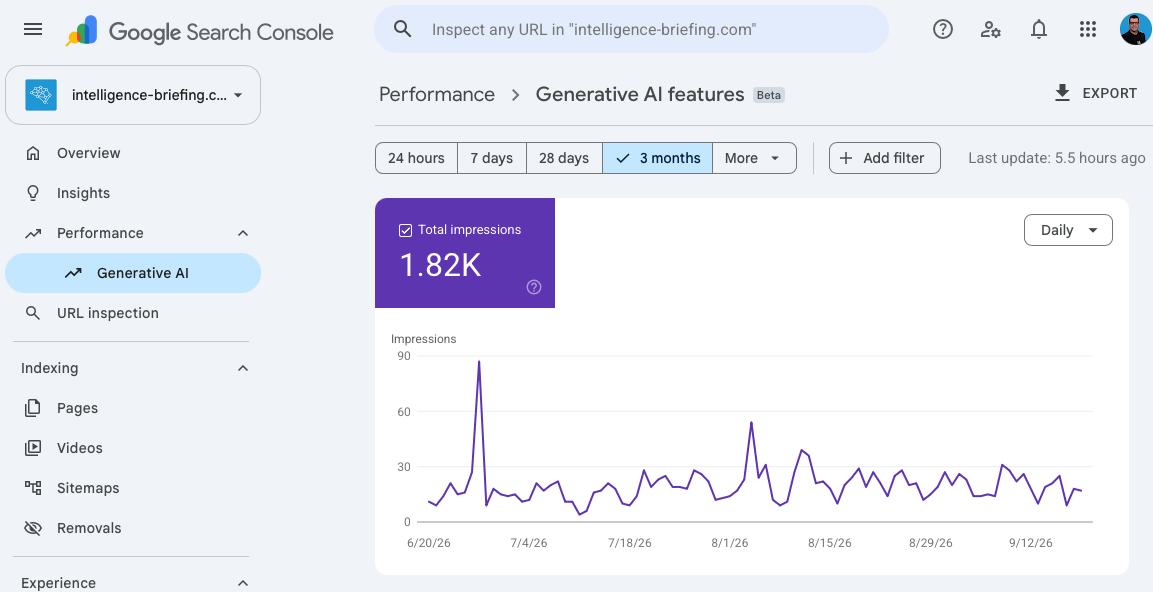
What to do next: After you have repurposed your content and built your pillar pages, watch the results in Bing Webmaster Tools and Google Search Console. Begin to analyze when spikes occur and whether they coincide with your publishing of new articles. This requires layering data from your published articles (name, date, and slug) and from Bing and Google analytics (slug, date, and view count) on top of each other. Begin my capturing the data for 2-3 months before you review which articles are working better than others and what keywords or search intents cite them.
Bonus: What LLMs Know About You
Two engineers set out to show what different LLMs have learned about you during their training runs, and whether you are in the model weights. If your business depends on being found or recommended by AI, this is important. In addition to being in the model weights (without accessing any external websites), accurate representation matters, especially when agents research and transact on a customer’s behalf; finding the right context is key. I ran it against my name, and the subtle differences in the models’ responses show what ChatGPT vs. Claude vs. smaller Chinese models might repeat.


Summary
Getting ready for Agentic Commerce means being discoverable by AI agents. The first step is augmenting your website to provide authoritative information that AI agents can cite and use. By repurposing content that already exists and publishing it on your own website, you can drive traffic to your own property. Grouping similar content pieces by topic pillars makes the information easier to discover and connect for AI agents. Finally, you can measure the results in traditional, public web analytics platforms. But the main question remains: do AI agents find and recommend your business, and do they know you even exist?
Do you want your business to become discoverable by AI agents?
Book a consultation or workshop to influence what AI agents recommend to your prospects.
Become an AI Leader

Join my bi-weekly live stream and podcast for leaders and hands-on practitioners. Each episode features a different guest who shares their AI journey and actionable insights. Learn from your peers how you can lead artificial intelligence, generative AI, agentic AI, and automation in business with confidence.
Join us live
October 13 - Michael Nevski (Consumer Market Intelligence Expert) will discuss the prerequisites for AI agents to complete financial transactions on their users’ behalf.
October 27 - Walter Schmidli (Leader of Paid Social Media) will talk about how leading brands remain discoverable as Agentic Commerce rises in popularity.
November 10 - Stefano Osteria (Global Vertical Leader, Logistics and Warehouse Management at Belden) will share how leaders must keep warehouse management and logistics in lockstep with Agentic Commerce innovation in the front office.
November 17 - Jess Graham (CEO and Founder of Banquet) will be on the show to discuss which channels your brand needs to own to retain the buying context in Agentic Commerce. [More details to follow on my LinkedIn profile…]
December 01 - Wayne Butterfield (Fractional Chief AI Officer) will share how companies can leverage Agentic AI for customer support to close the loop of Agentic Commerce. [More details to follow on my LinkedIn profile…]
December 15 - Jon Reed (Industry Analyst & Co-Founder of diginomica) and I will close out the year with a review of the biggest topics in the mirror, and the most impactful ones ahead. [More details to follow on my LinkedIn profile…]
Watch the latest episodes or listen to the “What’s the BUZZ?—AI in Business” podcast
Upcoming events
Join me or say hello at these sessions and appearances over the coming weeks:
October 14 - Speaking at Mastering CX: AI Agents by CX Network, virtual.
October 26-28 - Attending Gartner HR Symposium/ Xpo™ in Orlando, FL.
December 09-10 - Attending The AI Summit in New York, NY.
Follow me on LinkedIn for daily posts about how you can lead AI in business with confidence. Activate notifications (🔔) and never miss an update.
Together, let’s turn hype into outcome. 👍🏻
—Andreas
The detail most people skim past: all those mentions living on someone else’s site aren’t the weakness, they’re the whole asset. That’s exactly what the models trust, precisely because you didn’t write it. Curious which moved the needle more for you over the 3 months, the external mentions or the on-site restructuring? My money’s on the external signals doing the heavy lifting.
Your weekly analytics workflow makes the distinction between visibility and business value worth tracking explicitly. Could the trend report separate citation events, AI-referred sessions and qualified inquiries, and label which are directly measured versus inferred? A page can become easier to cite without the citation producing a visit. It would also help to state whether the two dashboards count overlapping appearances before combining their totals. Which downstream signal has changed most since the repurposing and pillar-page updates?