Personal assistants like Meta’s Muse or OpenAI’s dots are taking over tasks that people used to do themselves, including the final step of a purchase. Three adjustments follow for marketing leaders: move paid media up the funnel, expect a slower and murkier path to conversion, and seed the sources that agents read. To explore this topic further, I invited Walter Schmidli (Leader of Paid Social Media) to “What’s the BUZZ?”. Here’s what we talked about...
Paid Media Moves Up the Funnel
When an agent executes the last click, advertising does not lose its place, but it does change where it does its work. People still scroll through social feeds, watch television, and read content, and those moments remain the opportunity to put a brand in front of them. The purchase itself may later be completed by software acting on that person’s instructions, which means the ad no longer has to trigger the transaction on the spot. Its job becomes shaping what a person asks the agent to buy, and which brands the person has in mind when asking.
An old advertising principle explains why this matters: reach and frequency drive conversion. Out-of-home, radio, and television advertising worked this way long before digital targeting arrived, and the tools available today make that earlier work more precise and more personalized. Algorithmic targeting has been part of paid media for years, so agent-led buying changes where a message is served and how it is served, and leaves the rest of the discipline intact. Automation of manual campaign work and of reporting will keep improving along the way, which is useful but secondary to the shift in placement.
Picture a person who sees a mattress ad during a streaming show and weeks later asks an assistant to find a pillow that matches. The ad never produced a click, yet it shaped the preference that the agent was later asked to satisfy. The message therefore moves from “right message, right time, buy right now” to “right message, right time, consider it in the future.” For you, the practical step is to review how much of your paid media budget is justified purely by last-click results, and to decide deliberately how much of it should move toward earlier, awareness-oriented placements before agent-led buying makes that decision for you. If you cannot say how much of your current result traces back to ads that were seen weeks before the click, that is the first thing worth finding out.
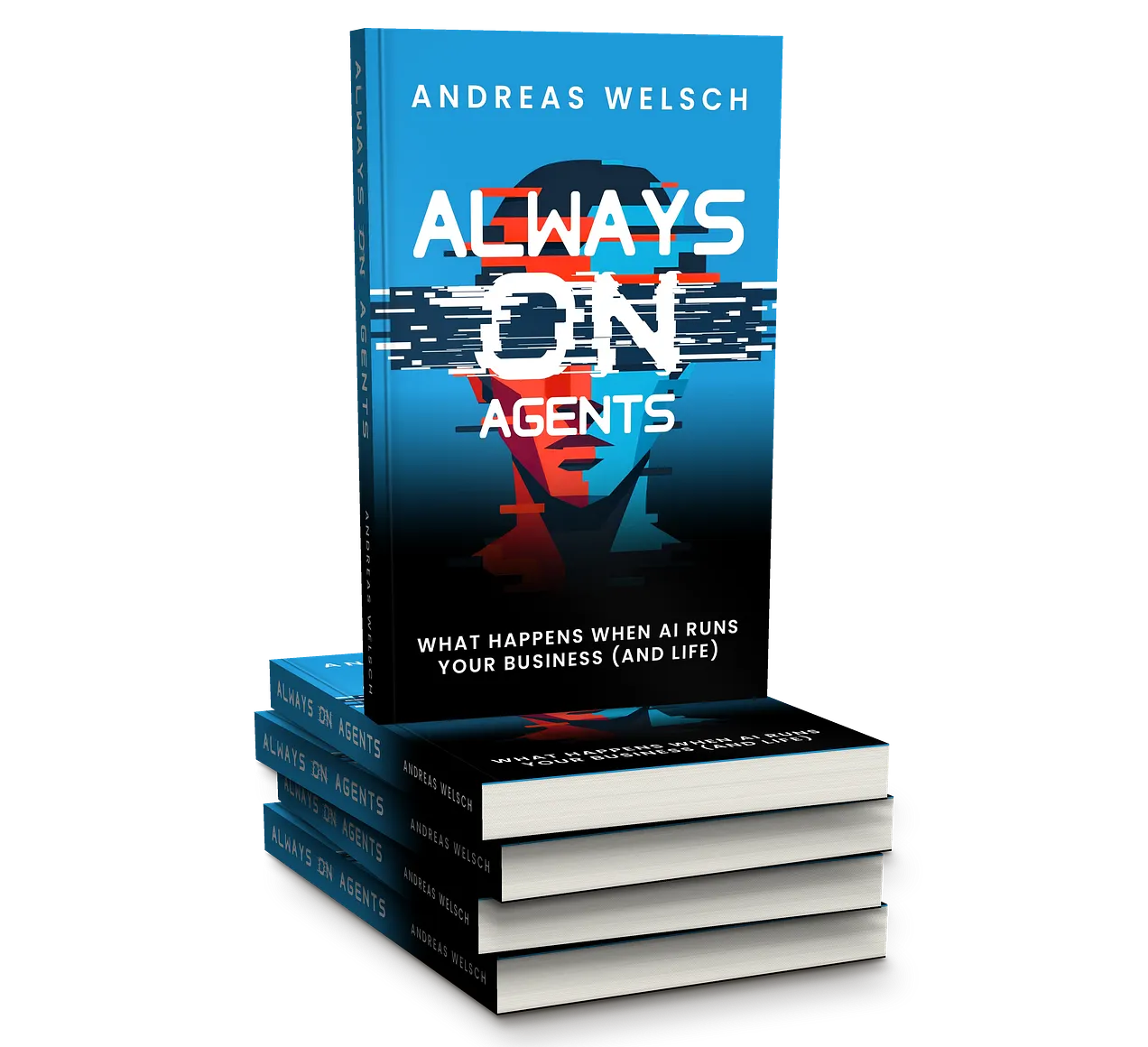
Get your copy: Always-on Agents
AI labs promise always-on agents that work around the clock, run entire departments, and let a business operate while its owner sleeps. Personal agents already compare prices, book appointments, and buy on behalf of their users. The pressure on leaders to act has never been higher, and it has rarely been harder to tell which claims hold up in practice.
Drawing on his first-hand experience and interviews with 30 experts, Andreas shows you how to design a business operating system for your organization, give your agents the context they need to work independently, secure them, and measure what they actually deliver. You will also learn how to prepare your business for customers who send their own agents to search, compare, and buy before those agents decide whether you make the shortlist.
Join the waitlist (drop me a message):
Measurement Gets Slower and Harder to Attribute
Today’s reporting assumes a short, traceable line from an impression to a sale: an ad appears in a feed, a person taps, and the product ships. When a software agent completes the purchase, that line stretches and in places disappears. The conversion may arrive after a longer lead time, and it may be much harder to trace back to the ad that planted the idea. A weak last-click number in that setting says little about whether the ad worked, and leaders who read it that way risk cutting the very placements that start the process.
Creative has to adapt as well. A growing share of purchases will begin with a person telling an agent what to look for, so messaging should account for the preferences and criteria a person is likely to pass along. Think of it as writing for two readers in sequence: the person who forms the preference and the agent that acts on it later. The first reader still responds to emotion, story, and imagery, while the second reader rewards clear and complete information, and a campaign that serves only one of them leaves value on the table. When you brief agencies and internal teams, ask for creative that answers the questions a person would put to an agent, such as what the product does, who it suits, and how it differs from the alternatives, and test that against the pages an agent is most likely to read before you approve it.
Before the next planning cycle, agree with your finance and analytics counterparts on which earlier signals, such as reach and frequency, will count as evidence that the work is paying off, and on how long a conversion window your reporting should allow. Settling that in advance keeps a quarterly review from asking for a precision that the new path cannot deliver, and it protects upper-funnel budgets from being judged by a metric that no longer describes how the purchase happens.
Seed the Sources That Agents Read
Emotion still works on the person, while an agent responds to descriptive, detailed, and crawlable information. A memorable campaign built on imagery and a short slogan moves people, and the detailed information agents rely on has to exist on a web page or a social platform where agents and language models can read it. Search, generative engine, and answer engine optimization become the baseline, and the specifications behind them will keep changing over the next few years, so give them a standing owner and a regular review.
Social platforms deserve a place in that plan because language models draw on some of them. They have also become more selective over time, so an average post is unlikely to be cited, while content from official spokespeople and recognized experts is far more likely to be passed along. For a brand, the opening is to identify where credible voices can publish about its products on specific platforms, and to test which of those placements influence what assistants say. Whatever you publish there should be specific enough for an agent to repeat accurately. Nobody has this figured out yet, which makes a small, deliberate test budget a sensible response and a large, confident commitment a premature one.
Larger questions remain open. Platforms with enormous reach may roll out assistants that become the default, or brands may build agents of their own, much as every brand eventually built an app, and the two will need a way to interact. Whether the large platforms will share data with each other is unsettled, and so is the shape of any commercial model. Sponsored results and paid integrations look like a likely path, since publishers and brands tend to find a way to monetize anything that carries attention, but none of it has been decided. So where should you place your bets while that plays out? Start with the sources you can influence today, and keep a watchlist of the publishers and agents that gain reach.
Summary
Three points carry this issue. First, make all of your product and brand information available in a form that agents and language models can digest, with search and generative engine optimization as the baseline. Second, keep advertising in the plan, but change its approach from prompting an immediate purchase to earning consideration for a later one, and measure it accordingly. Third, expect more opportunities to work with different publishers and different agents, and stay close to them as they develop over the next couple of years.
Each point protects revenue in a different way: the first keeps your offer visible to the software that now shops, the second keeps your budget from being cut on the basis of a metric that no longer fits, and the third keeps you from missing a channel while it is still inexpensive to test. Looking at your last-click report, which of your current budget decisions would still hold if an agent made every purchase next quarter?
Equip your team with the knowledge and skills to leverage Agentic AI effectively. Book a consultation or workshop to accelerate your company’s AI adoption.
Join my bi-weekly live stream and podcast for leaders and hands-on practitioners. Each episode features a different guest who shares their AI journey and actionable insights. Learn from your peers how you can lead artificial intelligence, generative AI, agentic AI, and automation in business with confidence.
December 01 - Wayne Butterfield (Fractional Chief AI Officer) will share how companies can leverage Agentic AI for customer support to close the loop of Agentic Commerce. [More details to follow on my LinkedIn profile…]
December 15 - Jon Reed (Industry Analyst & Co-Founder of diginomica) and I will close out the year with a review of the biggest topics in the mirror, and the most impactful ones ahead. [More details to follow on my LinkedIn profile…]
Watch the latest episodes or listen to the podcast
This mirrors what happened when SEO shifted to answer engines like Perplexity and ChatGPT search. Brands that only optimized for the human click lost visibility fast because the citation step moved upstream of the visit. Sounds like the same logic now applies to transactions: the 'last click' isn't a moment you can advertise to anymore, it's an API call you have to be eligible for.



This mirrors what happened when SEO shifted to answer engines like Perplexity and ChatGPT search. Brands that only optimized for the human click lost visibility fast because the citation step moved upstream of the visit. Sounds like the same logic now applies to transactions: the 'last click' isn't a moment you can advertise to anymore, it's an API call you have to be eligible for.
Liked the mattress and pillow example. Hard to see that path in any report.