Everyone is talking about AI agents, but what really happens when you try to bring them into real HR workflows? That’s when pilots and ideas meet the reality of business, people, and regulations. What looks good in a demo quickly falls apart or becomes a liability unless it’s planned and properly vetted upfront.
But even then, understanding workflows remains the priority before designing multi-agent systems. Removing unnecessary complexity and keeping the human role in focus as work continues to evolve are the next steps on this journey. But how can you actually do all of that in your business? To learn more about the most successful approaches, I invited Kris Saling, Chief Technology Advisor and Senior Data Leader, to join me on “What’s the BUZZ?”. Here’s what we talked about…
Start With Workflows Over Technology
A common mistake organizations make is starting with the question, “What can AI do?” instead of focusing on what they are actually trying to achieve. AI should never be the goal in and of itself; it is a tool that supports better outcomes. If you do not clearly understand your workflows, introducing AI will only make inefficient processes run faster.
The real starting point is to examine how work gets done today. This means identifying bottlenecks, redundancies, and tasks that may no longer be necessary. A useful way to approach this is through the framework of eliminating, simplifying, automating, and elevating. First, remove tasks that do not add value. Then simplify the remaining steps. After that, automate repetitive work. Finally, elevate human involvement to higher-value activities.
Interestingly, AI can also assist in this stage. By analyzing policies, procedures, and documentation, it can generate draft workflows for teams to refine. This saves time and provides a strong starting point for improvement. When you take this approach, patterns become clear. The best opportunities for AI are often where work accumulates, such as in inboxes, approvals, and repetitive administrative processes. If you skip this step and go straight to implementing AI, you risk reinforcing inefficiencies instead of solving them.
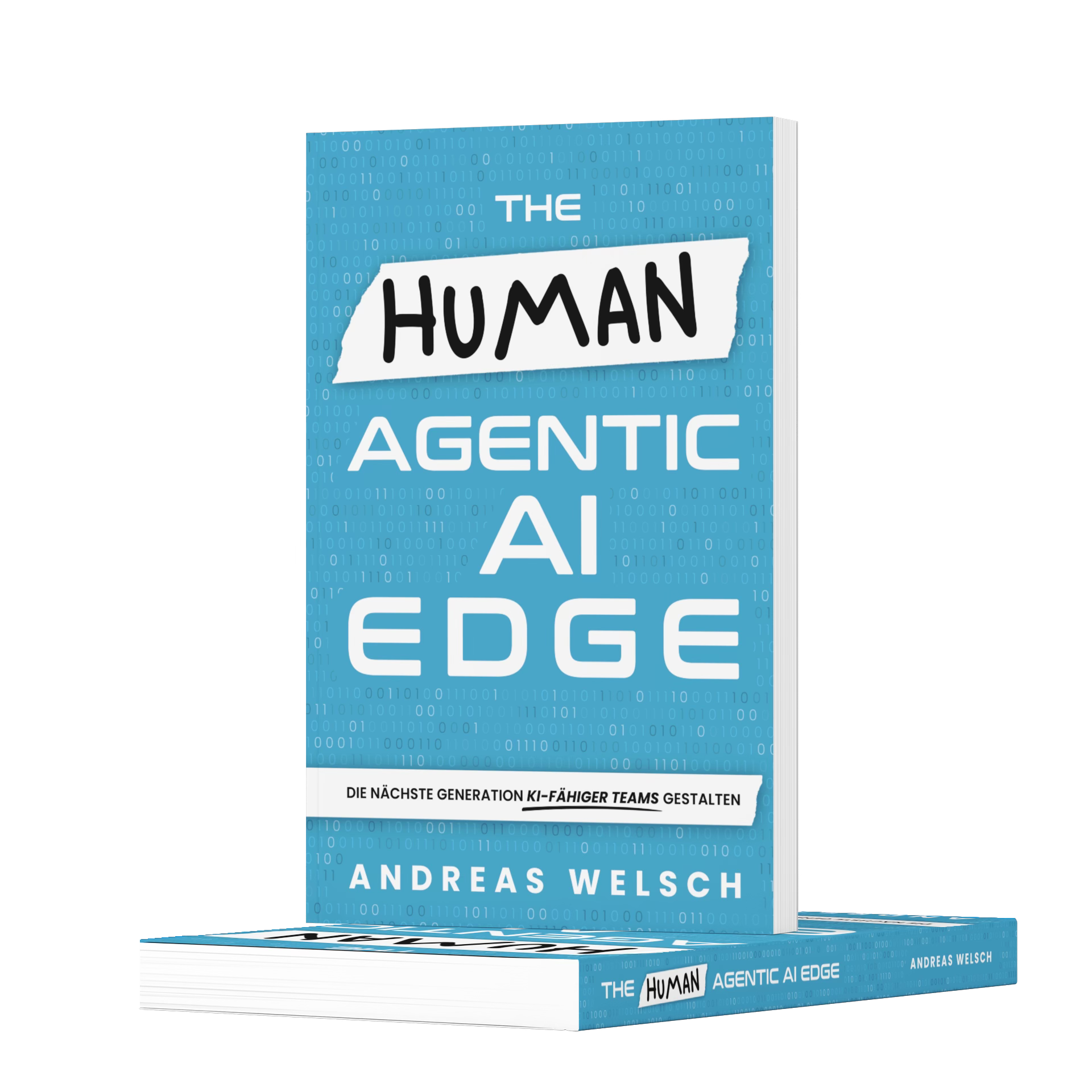
Get your copy: The HUMAN Agentic AI Edge
Organizations are racing to deploy Agentic AI, yet few are ready for the risks that emerge when employees use AI without structure, standards, or oversight.
The HUMAN Agentic AI Edge offers leaders a practical blueprint for building accountable AI-ready teams that consistently produce high-quality results. Drawing on real-world knowledge and insights from interviews with more than 50 AI leaders and experts, Andreas Welsch shows how to combine human judgment with Agentic AI capabilities to achieve the performance many organizations expect but rarely deliver. This book prepares you to shape the next generation of AI-ready teams delivering high-quality results with high accountability.
There is growing excitement about multi-agent systems, in which multiple AI agents collaborate to complete tasks. However, more agents do not automatically create more value. In fact, adding unnecessary complexity can make systems harder to manage, more expensive, and riskier to operate. The key is to keep things simple and intentional. Not every task requires an intelligent agent. In many cases, basic automation is sufficient. Before introducing multiple agents, it is important to break down tasks into smaller components and determine what level of intelligence is actually needed. A practical approach is to assign clear and focused roles to each agent. For example, one agent might handle execution while another reviews or validates the output. This separation makes systems easier to test, troubleshoot, and improve over time.
Governance also becomes critical as more agents are introduced. Without proper oversight, organizations can end up with systems that no one fully understands, similar to legacy tools that cannot be modified because their logic is unclear. To avoid this, it is important to maintain visibility into who created each agent, what it does, and when it was last updated. Establishing trust in these systems is essential. Organizations need ways to verify whether an agent is reliable or outdated. Without this level of transparency, scaling AI across the enterprise becomes difficult and potentially risky.
How the Human Role is Evolving
There is widespread concern that AI will replace jobs, especially at entry-level positions. However, the reality is that AI is more likely to reshape work than eliminate it. As routine tasks are automated, human roles shift toward areas that require judgment, creativity, and strategic thinking. This shift does create new challenges. Traditionally, people developed expertise by performing repetitive tasks and gradually building an understanding of systems. If AI removes these tasks, organizations must find new ways to build that foundational knowledge.
This means investing not only in AI training but also in domain education. Employees need to understand the systems they are working with, not just how to use the tools. Without that understanding, it becomes difficult to build effective solutions or make informed decisions.
Another important aspect is helping employees navigate their career paths in this changing environment. One idea is to create systems that function like a navigation tool for careers. These tools can show employees what roles they are qualified for, what skills they need to develop, and how they can progress as their current responsibilities evolve. This approach gives individuals more control over their growth. Instead of change happening to them, they can actively shape their direction. In a world where AI is transforming work, that sense of ownership becomes increasingly important.
Summary
Successfully integrating AI agents into an organization requires a thoughtful and structured approach. Begin with understanding and improving workflows before introducing any technology. Next, keep multi-agent systems simple and well-defined. Clear roles, manageable complexity, and strong governance are essential for building effective and sustainable systems. Finally, recognize that AI does not replace humans but changes the nature of their work. By focusing on skill development, career pathways, and human potential, organizations can ensure that their workforce continues to thrive alongside new technologies.
The next step is to take a practical look at your own organization. Choose one workflow, analyze it carefully, and identify areas for improvement. From there, you can begin to introduce AI in an intentional, effective, and goal-aligned way.
Equip your team with the knowledge and skills to leverage Agentic AI effectively. Book a consultation or workshop to accelerate your company’s AI adoption.
Join my bi-weekly live stream and podcast for leaders and hands-on practitioners. Each episode features a different guest who shares their AI journey and actionable insights. Learn from your peers how you can lead artificial intelligence, generative AI, agentic AI, and automation in business with confidence.