The recent tech stock selloff has fueled the “SaaSpocalypse,” with some SaaS companies losing 15–20% of their market value amid market reactions to the Agentic AI-driven threat. Over the past two weeks, I have advised several dozen private equity and institutional investors and discussed the impact of Agentic AI on tech stocks with industry analysts. Grounded in 25 years of leadership across the enterprise and AI software space, I see the recent market reaction being far ahead of reality.
The recent coverage and market reaction overlook an important distinction: not all software carries the same level of business impact and business risk. While the applications at the edges of business operations are more exposed, the applications that run core business processes such as finance, procurement, HR, and customer service are not going away easily. Here is why…
Core SaaS Transfers the Risk of Failure
Despite the doom and gloom of the “SaaSpocalypse,” business leaders will not swap out the applications that run a company’s core operations, even when a new technology looks exciting. The enterprise systems that run finance, HR, supply chain, manufacturing, compliance, procurement, and other critical workflows stay in place longer because businesses depend on them to behave in repeatable, traceable ways. That is the fundamental idea of standardized business processes. Applications are a part of a company’s operational infrastructure.
That matters because business leaders buy enterprise software not only for convenience or productivity. Reliability, support, governance, and accountability are among the factors driving buying decisions. If something goes wrong in a mission-critical system, somebody needs to know who owns the problem, how to restore operations, and how to explain what happened. In many organizations, that requirement alone keeps core software far more durable than industry outsiders expect.
This is also why enterprise buyers have historically leaned toward standard software rather than building everything themselves. Building a system is only the beginning. After that come maintenance, uptime, security, integration, auditing, upgrades, incident response, and all the political and operational consequences that arise when a system breaks at the wrong time. AI may reduce the effort needed to create software, but it does not eliminate the cost of operating it. In the core of the enterprise, operating it is the hard part.
AI Disintermediation Diminishes with Increasing Business Criticality
To better understand where Agentic AI will likely disintermediate vendors, it helps to separate the categories where change will be faster from those where it will be slower.
For example, many professionals use project management software, but to varying degrees and for various types of projects. If a small internal team uses a lightweight planning tool, there are plenty of substitutes. The team can move to another app, use a spreadsheet, work from email threads, or even build a simple app on top of a general-purpose platform. If it fails, the result will be a manageable inconvenience, but the business still functions.
Compare that with software used in a highly regulated, high-risk environment, such as aviation, where a failure can result in major financial, legal, or safety consequences. Project management for a marketing campaign and project management for building an aircraft operate in different risk categories. In the first case, disruption is annoying. In the second, it is catastrophic.
That is the point people miss when they talk about “SaaS” as though it were a uniform category. In reality, some categories are deeply tied to business continuity and risk management. Others are much easier to experiment with, work around, or replace. But they were also always more expendable — AI disruption or not. The closer the software is to the heartbeat of the business, the riskier it is to rip out.
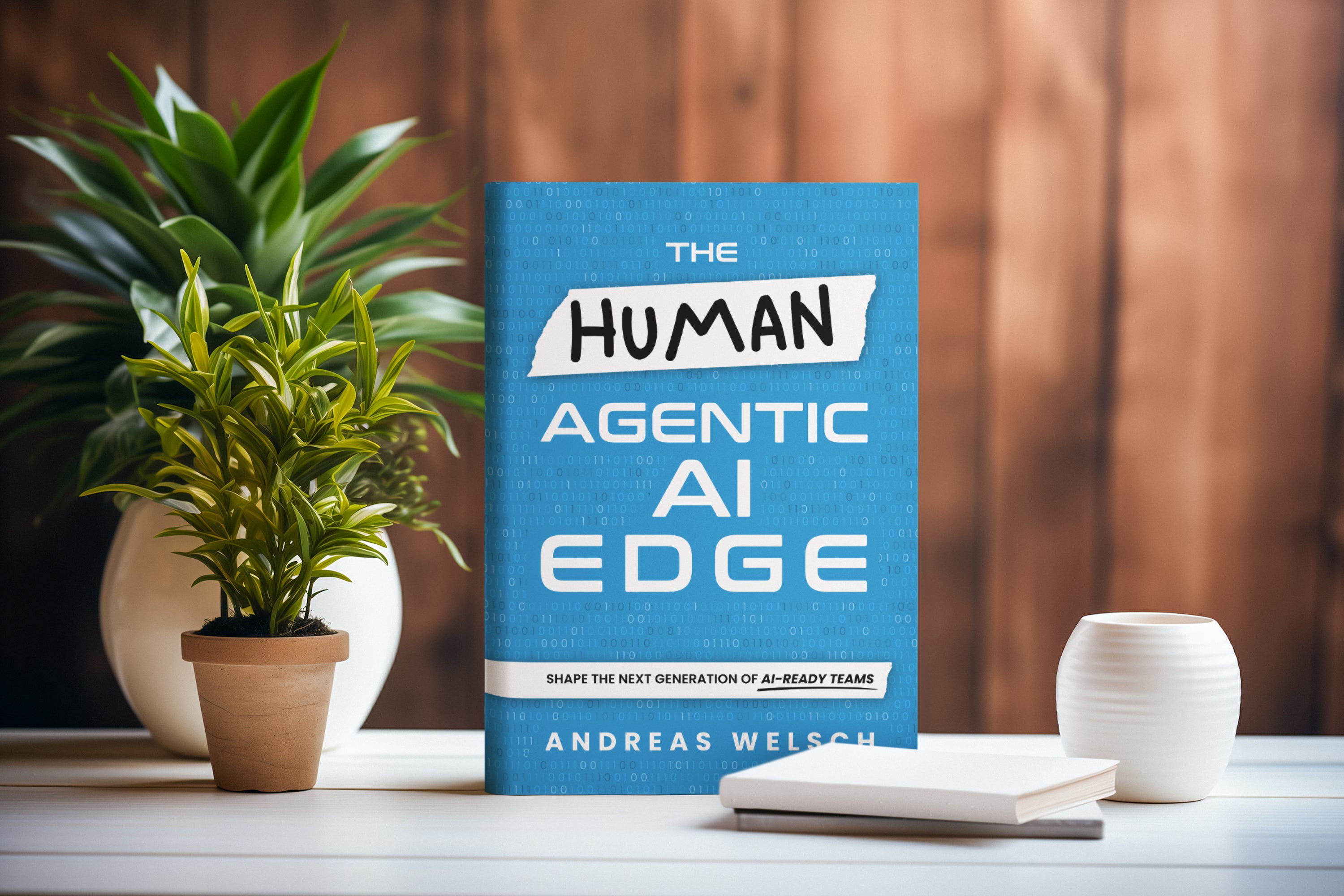
NEW BESTSELLER — The HUMAN Agentic AI Edge
Organizations are racing to deploy Agentic AI, yet few are ready for the risks that emerge when employees use AI without structure, standards, or oversight.
The HUMAN Agentic AI Edge offers leaders a practical blueprint for building accountable AI-ready teams that consistently produce high-quality results. Drawing on real-world knowledge and insights from interviews with more than 50 AI leaders and experts, Andreas Welsch shows how to combine human judgment with Agentic AI capabilities to achieve the performance many organizations expect but rarely deliver. This book prepares you to shape the next generation of AI-ready teams delivering high-quality results with high accountability.
AI-Native Disruption of Non-Essential SaaS Applications
Once that risk gradient is clear, you can see where the more immediate disruption is likely to happen. It is not primarily in the systems that keep the books accurate, pay employees correctly, manage regulated workflows, or coordinate complex industrial operations. It is more likely to happen in categories that are useful but not central. These are tools that help teams organize work, communicate ideas, track lighter workflows, coordinate content, or manage activities that do not bring the business to a halt if they fail.
Those categories are exposed for several reasons. For example, they are easier to replace, often less regulated, can tolerate more experimentation, and the switching costs are usually much lower than in a core business system. That creates space for AI-native startups to move quickly and for enterprises to test custom-built workflows or agent-led applications without assuming existential business risk.
This is also where the promise of fast software creation becomes more realistic. When the process is less critical, the tolerance for imperfection is higher. A team may accept a tool that is good enough, faster to deploy, and cheaper to build, even if it lacks some of the depth and resilience of an incumbent platform. At the end of the day, most SaaS applications will evolve as vendors face sharper pressure to prove why their products deserve to survive as AI makes simpler substitutes easier to build.
Thanks for reading The AI MEMO! Share this thought-provoking post with your network
Trust Remains the Top Factor for Enterprise Adoption
Even when a new AI-native product is technically impressive, enterprise adoption is not driven solely by technical capability. Businesses still ask familiar questions. Who supports this product? How does it behave under load? What happens if it goes down? What does implementation look like? Can it meet audit requirements? Will the company still be around in three years? Who owns the outcome if something breaks?
Those questions often matter more than whether a startup can demonstrate a clever workflow. That is why incumbents still have meaningful advantages in core categories. They have installed bases, long-term contracts, trusted relationships, domain expertise, and a record of surviving enterprise scrutiny. AI may weaken some of those advantages over time, but it does not erase them overnight.
It also explains why the most realistic path is not collapse but sorting. Some incumbents will adapt well, while some will not, and adjacent categories will see real disruption from smaller players. However, most large vendors will strengthen their position by using AI to deepen their existing workflows rather than replace them.
Summary
The real divide in the “SaaSpocalypse” conversation is not between old software and new software, but between essential and non-essential software. Core SaaS used in business-critical processes is not going away easily because the risk of failure is too high and the enterprise still values dependability, accountability, and trust. Software that sits further from the core is more exposed because it is easier to replace, rebuild, and experiment with.
That framing gives you a much better way to assess what AI actually threatens. The question of whether SaaS disappears is actually about where the business can tolerate change, and where it cannot. That is where the next wave of winners and losers will be decided.
Equip your team with the knowledge and skills to leverage AI effectively. Book a consultation or workshop to accelerate your company’s AI adoption.
Join my bi-weekly live stream and podcast for leaders and hands-on practitioners. Each episode features a different guest who shares their AI journey and actionable insights. Learn from your peers how you can lead artificial intelligence, generative AI, agentic AI, and automation in business with confidence.
March 31 - Elise Neel (SVP of Global Strategy & Strategic Partnerships at Panasonic) will share how to scale executives’ time with specialized agents. [More details to follow on my LinkedIn profile…]
Watch the latest episodes or listen to the podcast